
When your roof leaks, protect the room first: catch the water, move valuables, and keep people away from sagging plaster and anything electrical. Then work out how serious it is. A significant leak or storm damage is a call to VICSES on 132 500; a minor leak is a job for a roofer. Photograph everything before it is fixed, and get the cause repaired, not just the stain painted over.
The short answer
- Catch the water, move valuables, and keep clear of sagging ceilings and wet electrics
- Life-threatening: 000. Significant leak or storm damage to the roof: VICSES 132 500
- Minor leak: call a roofer, and your insurer if it was storm damage
- Temporary fixes buy time; they are not repairs
- The stain is rarely directly under the fault, so the roof needs inspecting
What to do right now
- Catch the waterPut a bucket, tub or towels under the drip. Move furniture, rugs, electronics and documents out of the way.
- Relieve a bulging ceiling safelyIf the plaster is bulging with water, keep everyone out of the room. A ceiling full of water can collapse.
- Stay clear of electricsIf water is near light fittings, power points or the switchboard, turn off that circuit if you can do so safely and call an electrician.
- Photograph everythingDate-stamped photos of the ceiling, the water and any damage outside help your roofer and any insurance claim.
- Make the right callLife-threatening emergency: 000. Significant leak or storm damage to the roof: VICSES on 132 500. Minor leak: a roofer.
Sources: VICSES: When to call 132 500.
When to call VICSES and when to call a roofer
| Situation | Who to call |
|---|---|
| Life-threatening emergency | Triple Zero (000) |
| Roof damaged or leaking significantly in a storm | VICSES on 132 500 |
| Tree down causing structural damage | VICSES on 132 500 |
| Minor leak or superficial damage | A roofer |
| Permanent repairs after VICSES has made it safe | A roofer, and your insurer |
VICSES may carry out emergency temporary repairs, such as a tarp, and says minor leaks and superficial damage should go to a professional tradesperson. Permanent repairs always need a roofer.
Sources: VICSES: When to call 132 500.
Temporary fixes while you wait
- Contain it inside: buckets, towels and plastic sheeting over furniture are the safest first steps
- Clear what you can reach safely: a gutter or downpipe blocked with leaves, cleared from a properly set-up ladder, can stop water backing up under the tiles
- Tarp: a roofer or VICSES can secure a tarp over a damaged section. Do not climb onto a wet roof to do it yourself
- Sealant on a cracked tile: a roofer may use it to hold off water briefly, but it is a stopgap and the tile still needs replacing
Wet tiles are slippery, cracked tiles give way, and storms bring wind. WorkSafe Victoria treats falls from roofs as one of the most serious risks in housing construction, and that is for trained crews with safety rail. Leave the roof to professionals.
Sources: WorkSafe Victoria: Prevention of falls in housing construction.
Got a leak?
Call us, or send photos of the ceiling and roof and we will tell you what we think is going on.
Finding where the leak is coming from
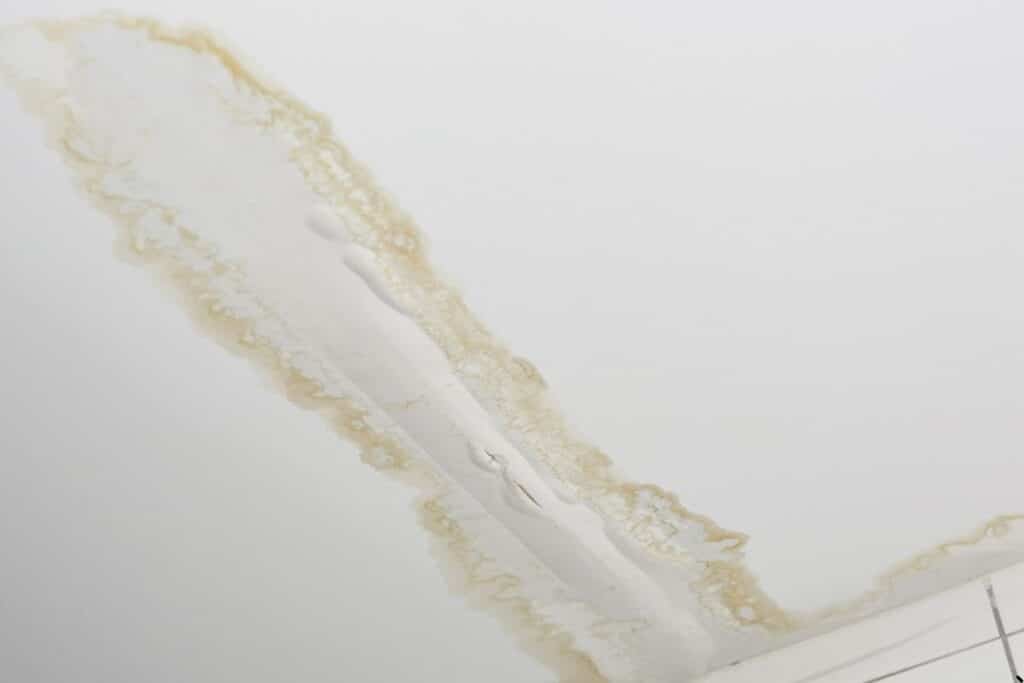
The stain on your ceiling is rarely directly under the fault. Water runs along battens, sarking and ceiling joists before it drips through the plaster, sometimes metres away. That is why patching the obvious spot often fails.
The pattern helps. A leak that only shows in wind-driven rain often points to ridge capping or flashings; a steady drip in any heavy rain points to a cracked tile, a rusted valley or a blocked gutter. Read the most common places a roof leaks for each one.
Common causes of tiled roof leaks
| Cause | What you might notice | The fix |
|---|---|---|
| Cracked or slipped tiles | Daylight in the roof space, drips in any heavy rain | Replace the tile with a matched one |
| Failed ridge bedding or pointing | Stains near ridge lines, mortar in the gutters | Rebed and repoint |
| Rusted or blocked valleys | Stains along an internal corner of the roof | Valley repair |
| Blocked gutters | Overflow, stains on eaves and outside walls | Clear the gutters |
| Flashings | Leaks around chimneys, skylights, vents or walls | Reseal or replace the flashing |
| Condensation | Damp patches in cold weather with no rain | Improve roof ventilation |
Insurance and storm damage
Moneysmart notes that most home insurance policies cover storm damage. Financial Counselling Australia has found many refused claims rely on wear-and-tear or maintenance exclusions, so the evidence matters: photographs taken at the time, the date of the storm, and a roofer’s report on what failed and why. Keep receipts for any emergency work. Your insurer will tell you whether to arrange repairs yourself or use their builder.
Sources: Moneysmart: Storm, flood and fire insurance; Financial Counselling Australia: Wear-and-tear exclusions.
Getting it fixed properly
A proper repair starts in the roof space and on the roof, not at the ceiling. Royce Roofing traces where water is getting in, fixes the cause with tiles and materials from our own yards, and tells you about anything else close to failing. See roof leak repairs for how we do it.
WorkSafe Victoria’s compliance code for housing construction puts edge protection such as guard railing ahead of harnesses and ladders when controlling the risk of falls from a roof. Our crews set up our own temporary safety rail, ladder guards and, where there are old skylights, safety nets before anyone works on the roof. Every crew member holds a working at heights qualification.
Common questions
What should I do first when my roof leaks?
Catch the water, move valuables, and keep people away from bulging plaster and anything electrical. Photograph the damage, then call VICSES on 132 500 for significant storm damage, or a roofer for a minor leak.
Should I call the SES for a leaking roof?
VICSES says to call 132 500 if your roof is damaged or leaking significantly, including storm damage. For minor leaks and superficial damage it recommends a professional tradesperson.
Can I fix a leaking roof myself?
You can contain the water inside and clear gutters from a safe ladder. Anything on the roof, especially when it is wet, should be left to a professional with safety equipment.
Why is the leak not where the stain is?
Water runs along battens, sarking and joists before dripping through the ceiling, so the fault is often some distance from the stain.
Will insurance cover a roof leak?
Most home insurance covers sudden storm damage. Leaks caused by wear and tear or lack of maintenance are a common reason claims are refused, so photos and a roofer’s report help.
Is a tarp a permanent fix?
No. A tarp or sealant buys time until the cause is repaired. Leaving it too long risks more damage to the roof and ceiling.
Related
Sources: VICSES: When to call 132 500; WorkSafe Victoria: Prevention of falls in housing construction; Moneysmart: Storm, flood and fire insurance; Financial Counselling Australia: Wear-and-tear exclusions.

Comments are closed