

Roof repointing replaces the flexible compound that seals the ridge and hip capping on a tiled roof. Your roof needs it when that pointing cracks, shrinks or comes away, because water and wind then get under the capping. If the mortar bedding underneath has also broken down, the job becomes a rebed and repoint.
The short answer
- Pointing is the coloured seal over the mortar bedding that holds your ridge and hip caps
- Signs: cracked or missing pointing, loose ridge caps, mortar in the gutters, stains near ridge lines
- Repoint when the bedding is sound; rebed and repoint when it is crumbling
- Done correctly with flexible pointing, a rebed and repoint typically lasts 15 to 20 years
- It is work at height: leave it to a qualified roof tiler
What roof pointing is
Along every ridge and hip of a tiled roof sits a row of curved capping tiles. They are laid on a bed of sand and cement mortar, called bedding, which fills the gap between the capping and the roof tiles below. Over the bedding goes the pointing: a flexible compound that seals the joint, keeps water out and helps hold the capping in place.
Modern flexible pointing is designed to move slightly with the roof as it heats, cools and settles, rather than cracking like the old cement pointing on many Melbourne homes. Manufacturers such as Monier describe it as a finishing layer over the bedding, not a replacement for it.
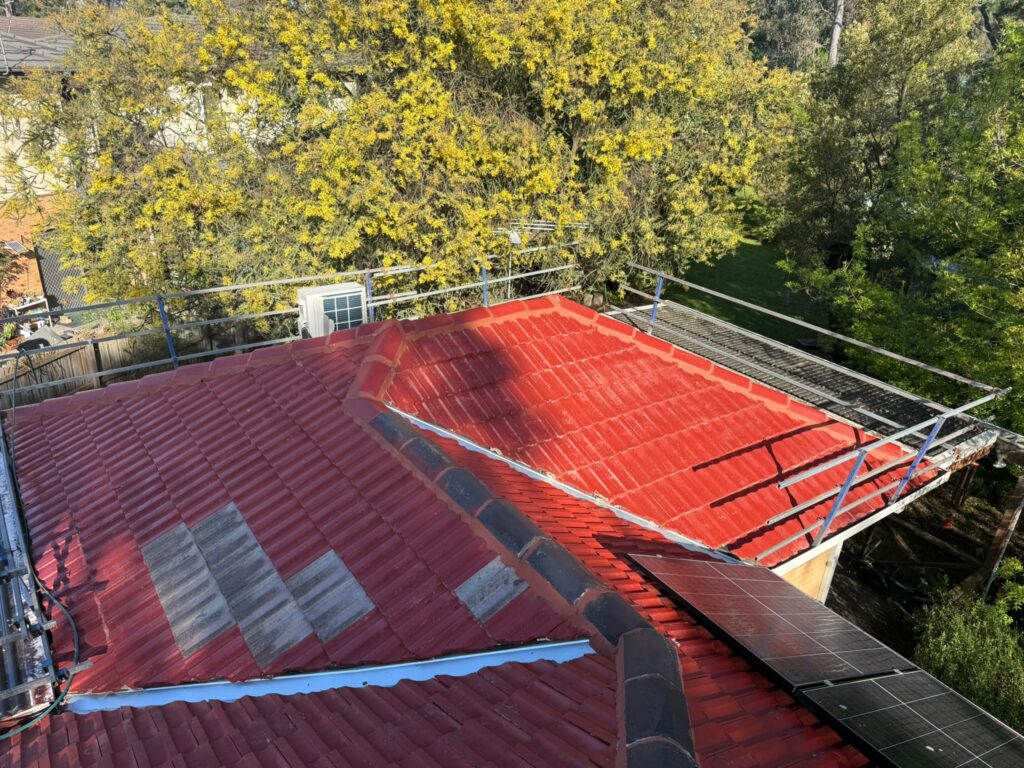
Signs your roof needs repointing
- Cracked, flaking or shrunken pointing along the ridges and hips, often worst on the side that gets the most sun
- Gaps between the capping and the tiles where you can see bedding or daylight
- Loose or rattling ridge caps, especially after strong wind
- Chunks of mortar in the gutters or on paths and garden beds below the eaves
- Water stains on the ceiling near the line of a ridge or hip
- Moss, lichen or weeds growing out of the ridge line, which means moisture is getting in
- Ridge lines that are no longer straight when you look along them from the street
You can spot most of these from the ground with a pair of binoculars. Our guide to inspecting your roof safely shows you what to look for.
Repoint or rebed and repoint?
The deciding factor is the bedding. If the mortar under the capping is still solid, new pointing over the top restores the seal. If the bedding is cracked, crumbling or has washed out, new pointing has nothing sound to grip, so the caps come off, the old bedding is removed and the caps are relaid on fresh bedding before pointing.
| Repoint only | Rebed and repoint | |
|---|---|---|
| When it fits | Pointing has failed but the bedding is sound | Bedding is cracked, loose or washing out |
| What happens | Old loose pointing removed, new flexible pointing applied | Caps lifted, old bedding removed, caps relaid on new bedding, then pointed |
| Typical result | Seal restored | Capping re-secured and sealed |
| Read more | This guide | Rebedding and repointing |
On older Melbourne roofs we usually find the bedding has gone too, which is why most of our ridge work is a full rebed and repoint. We will show you photos of what we find before quoting.
Is your ridge capping cracking?
We will inspect the roof, show you photos, and tell you whether it needs a repoint or a full rebed.
How a roof is repointed
- Safety set-upOur crews put up our own temporary safety rail and ladder guards before anyone works on the roof.
- Inspect every ridge and hipWe check each run of capping, the bedding underneath, and the tiles alongside for cracks.
- Remove failed materialLoose pointing, and where needed the capping and old bedding, is cleared back to a sound base.
- Rebed where neededCaps are relaid in line on fresh sand and cement bedding, with broken caps replaced from our yard.
- Apply flexible pointingThe new pointing is applied and finished to the manufacturer’s instructions, in a colour to suit the roof.
- Clean upMortar and debris are cleared from the roof, gutters and around the house, and we walk you through the finished work.
The standards that apply
Ridge and hip capping is not just decoration. The National Construction Code’s housing provisions for roof tiles require ridge, hip, barge and valley tiles to be fixed, and the installation of roof tiles is covered by Australian Standard AS 2050. Flexible pointing products are tested for wind resistance under AS 4046.8. A good repoint keeps your capping performing the way those standards intend.
Sources: NCC 2022 Housing Provisions Part 7.3: Roof tiles; HIA: AS 2050 Installation of roof tiles; Monier: Flexible pointing technical data sheet.
How long repointing lasts
Done correctly, with the bedding sound and a quality flexible pointing, a rebed and repoint typically lasts 15 to 20 years. What shortens that life: pointing laid over crumbling bedding, cheap or rigid compounds, and other trades walking on ridge caps when installing antennas, solar panels or air conditioners.
If someone has been on your roof to install solar, an antenna or an air conditioner, have a look along the ridges from the ground afterwards. Cracked caps and pointing are common, and easier to fix early.
Can you repoint a roof yourself?
Pointing compound is sold to the public, and our own yard sells it. But repointing means working along the ridge, the highest and most exposed part of the roof. WorkSafe Victoria’s compliance code for housing construction treats falls from heights as a serious risk and puts edge protection ahead of ladders and harnesses. For most homeowners the honest answer is to leave the ridge to a qualified roof tiler with proper safety equipment.
Sources: WorkSafe Victoria: Prevention of falls in housing construction.
What affects the cost
We quote every job after an inspection, because the price depends on the roof rather than a rate card:
- The total length of ridges and hips
- Whether it is a repoint or a full rebed and repoint
- Roof height, pitch and access
- How many capping tiles need replacing
- Whether other repairs, such as broken tiles or valleys, are done at the same time
If several parts of the roof are failing at once, a roof restoration that includes the rebed and repoint can be better value than separate repairs.
Common questions
What is the difference between bedding and pointing?
Bedding is the sand and cement mortar that sits under the ridge and hip caps and fills the gap to the tiles. Pointing is the flexible compound applied over the bedding to seal the joint and help hold the caps in place.
How do I know if my roof needs repointing?
Look for cracked or missing pointing along ridges and hips, loose caps, mortar pieces in your gutters, and ceiling stains near the ridge line. Binoculars from the ground are enough to spot most of these.
How long does roof repointing last?
Done correctly, with sound bedding and a quality flexible pointing, a rebed and repoint typically lasts 15 to 20 years. Foot traffic from other trades and pointing laid over failing bedding are the usual reasons it fails sooner.
Can you repoint over old pointing?
Only if the old pointing and the bedding underneath are sound. Loose or cracked pointing has to be removed first, and if the bedding is crumbling the caps need to be rebedded before new pointing goes on.
Does repointing stop roof leaks?
It stops leaks that come through the ridge and hip capping. Leaks from cracked tiles, rusted valleys or flashings need their own repairs, which is why we inspect the whole roof.
Is repointing part of a roof restoration?
Yes. A full restoration includes rebedding and repointing where needed, along with cleaning, tile repairs, valleys and, for suitable roofs, coating.
Related
Sources: Monier: Flexible pointing technical data sheet; NCC 2022 Housing Provisions Part 7.3: Roof tiles; HIA: AS 2050 Installation of roof tiles; WorkSafe Victoria: Prevention of falls in housing construction.

Comments are closed