

Tiled roofs last a long time, but the parts around the tiles do not maintain themselves. Clear gutters and valleys twice a year, keep trees off the roof, fix broken tiles and cracked pointing early, and have a professional inspection every few years. That routine is what separates a roof that needs a repair from one that needs replacing.
The short answer
- Gutters and downpipes: clear twice a year, and before fire season
- Valleys: keep clear, at least yearly
- Professional inspection: around every five years, and after big storms
- Fix broken tiles, cracked pointing and rusty valleys early
- Maintenance records help if you ever make an insurance claim
Why roof maintenance matters
Quality roof tiles are built to last decades. What fails first are the parts around them: the mortar bedding and pointing under the ridge caps, the metal valleys, flashings and gutters. Each of those is cheap to fix early and expensive once water has been getting into the roof space for a few winters.
There is also an insurance reason. Financial Counselling Australia has reported that many denied home insurance claims rely on wear-and-tear or maintenance exclusions. A roof you can show has been looked after is easier to claim on after a storm.
Sources: Financial Counselling Australia: Wear-and-tear exclusions.
Your roof maintenance schedule
| How often | Task | Who |
|---|---|---|
| Twice a year | Clear gutters and downpipes; look over the roof from the ground | You or a gutter cleaner |
| Before fire season | Clear gutters and prune branches overhanging the roof | You or an arborist |
| At least yearly | Keep valleys clear of leaves and debris | A professional, since valleys are on the roof |
| After storms | Check ceilings and the roof for damage | You, then a roofer if needed |
| Every five years or so | Professional inspection of tiles, capping, valleys and flashings | A roofer |
| As needed | Replace broken tiles, repoint, replace rusted valleys | A roofer |
Sources: enHealth: Guidance on the use of rainwater tanks; CFA: Start preparing your property for fire season; Monier: Roof cleaning and maintenance.
Not sure what your roof needs?
Book a free inspection. We will tell you what is due now and what can wait.
Gutters, downpipes and valleys
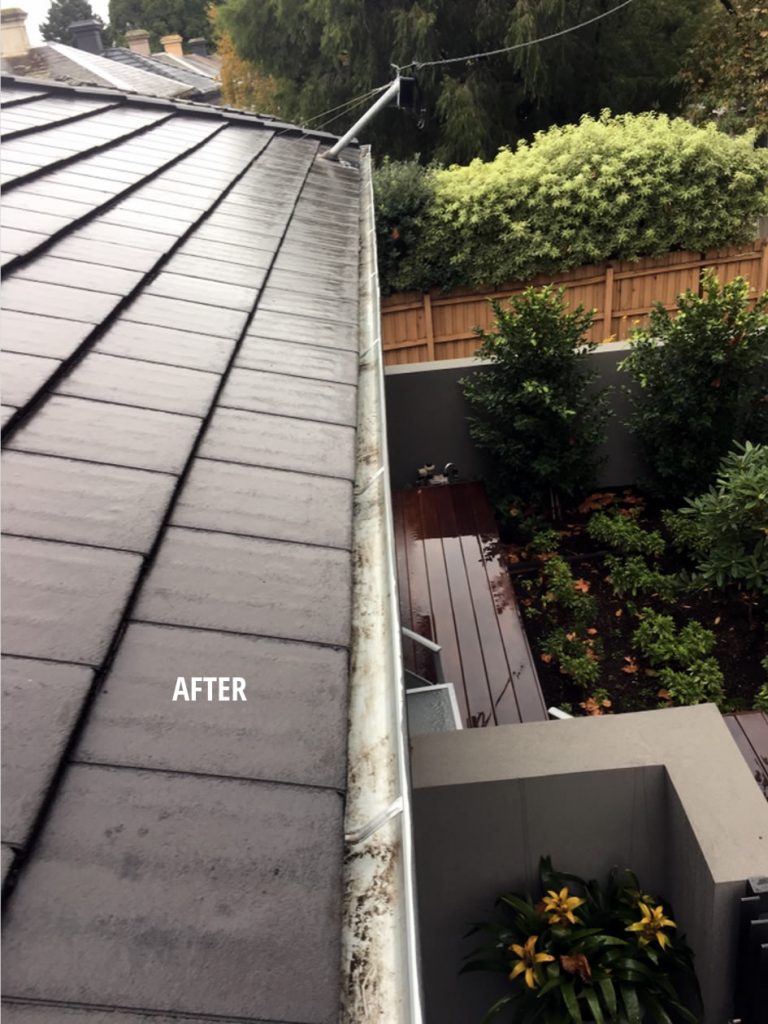
Blocked gutters overflow into eaves and walls, and blocked valleys dam water until it backs up under the tiles. Health guidance on rainwater tanks recommends cleaning roofs and gutters twice a year, and disconnecting the tank inlet while you do it so debris does not wash into your water supply. Monier recommends valleys be cleaned at least once a year.
If you have galvanised gutters, check them for rust. BlueScope no longer recommends galvanised steel for gutters, and Zincalume or Colorbond replacements last longer.
Our sister business PorterVac specialises in vacuum gutter cleaning. Read the best way to clean your gutters if you are doing it yourself.
Sources: enHealth: Guidance on the use of rainwater tanks; Monier: Roof cleaning and maintenance; BlueScope: Steel for gutters and downpipes.
Tiles, capping and pointing
Replace broken or slipped tiles as soon as you find them; one cracked tile can let water reach the sarking and timbers below. Keep an eye on the ridge lines: cracked or missing pointing and mortar in the gutters mean the capping needs a repoint or a rebed. These are small jobs on their own, and the most common cause of bigger repairs when they are left.
- Stay off the roof: walking on tiles cracks them
- Keep matching spare tiles in the shed for quick repairs
- If you need a match, our yards hold over 200 tile types
Moss, lichen and cleaning
Moss and lichen hold moisture against the tiles and block water flow in valleys. Cleaning is worthwhile, but the method matters. Monier advises against using pressure washers on its roof tiles, because high pressure can damage the tile surface and drive water under the laps. Some roofs suit a careful pressure clean as part of a restoration, others do not. Read our guide to roof pressure cleaning for how we decide.
Sources: Monier: Roof cleaning and maintenance.
Concrete and terracotta need different care
| Concrete tiles | Terracotta tiles | |
|---|---|---|
| Surface | The colour coating wears and the tile becomes more porous over time | Fired clay holds its colour; the surface weathers slowly |
| Painting | Can be restored and recoated. Monier notes painting improves appearance, not waterproofing | Usually cleaned and repaired rather than painted |
| Common jobs | Cleaning, repairs, rebed and repoint, recoat | Matched tile replacement, rebed and repoint, valleys |
| Read more | Concrete roof tiles | Terracotta roof tiles |
Sources: Monier: Roof cleaning and maintenance; Brickworks: Reasons to choose terracotta roof tiles.
Trees, solar panels and rainwater tanks
- Trees: prune branches back from the roof. They scrape tiles, drop leaves into valleys and give vermin a path in. The CFA recommends it before fire season.
- Solar panels: leaves collect under panels. After any installation, check the ridges and tiles near the panels from the ground for cracks.
- Rainwater tanks: disconnect the inlet when cleaning the roof or gutters, and do not collect run-off from a newly painted roof until the coating has cured, as health guidance advises.
Sources: CFA: Start preparing your property for fire season; enHealth: Guidance on the use of rainwater tanks.
What to do yourself and what to leave
| You can do | Leave to a professional |
|---|---|
| Look over the roof from the ground twice a year | Anything that means walking on the roof |
| Check ceilings and the roof space for stains | Replacing tiles, valleys and flashings |
| Clear gutters from a properly set-up ladder | Rebedding and repointing ridge capping |
| Prune branches from the ground | Cleaning and coating the roof |
WorkSafe Victoria’s compliance code for housing construction puts edge protection such as guard railing ahead of harnesses and ladders when controlling the risk of falls from a roof. Our crews set up our own temporary safety rail, ladder guards and, where there are old skylights, safety nets before anyone works on the roof. Every crew member holds a working at heights qualification.
Common questions
How often should a tiled roof be maintained?
Clear gutters twice a year, keep valleys clear at least yearly, look over the roof from the ground after storms, and have a professional inspection around every five years.
What does roof maintenance include?
Clearing gutters, downpipes and valleys, replacing broken tiles, repointing or rebedding ridge capping, checking flashings, managing moss and lichen, and trimming trees back from the roof.
Does roof maintenance affect insurance?
It can. Many denied home insurance claims rely on wear-and-tear or maintenance exclusions. Keeping records of inspections and repairs helps show damage came from a storm rather than neglect.
Should I pressure wash my roof?
Not without advice. Monier advises against pressure washers on its tiles. Whether a roof suits a careful pressure clean depends on the tile type and condition, which we check before recommending it.
When should I clean my gutters?
At least twice a year, before fire season, and more often if you have trees overhanging the roof. Disconnect any rainwater tank inlet while you clean.
Is a roof restoration part of maintenance?
A restoration is the major service in a roof’s life: it resets the cleaning, repairs, ridge capping, valleys and coating in one job. Regular maintenance between restorations keeps it lasting longer.
Related
Sources: enHealth: Guidance on the use of rainwater tanks; CFA: Start preparing your property for fire season; Monier: Roof cleaning and maintenance; BlueScope: Steel for gutters and downpipes; Financial Counselling Australia: Wear-and-tear exclusions; Brickworks: Reasons to choose terracotta roof tiles.

Comments are closed