

You can check most of a tiled roof without climbing on it. Walk around the house with binoculars looking for broken or slipped tiles, cracked ridge pointing, rusty valleys and overflowing gutters, then check the ceilings and roof space for water stains. Do it twice a year and after every big storm, and leave anything on the roof itself to a professional.
The short answer
- Inspect from the ground with binoculars, and from inside the roof space with a torch
- Look for broken tiles, cracked pointing, rusted valleys, blocked gutters and damaged flashings
- Check twice a year and after storms, and have a professional inspection every few years
- Do not walk on the roof: tiles crack underfoot and falls are the main risk
- Photograph what you find; it helps your roofer and any insurance claim
Safety first: stay off the roof
The most useful roof inspection a homeowner can do happens from the ground and from inside the roof space. Walking on tiles cracks them, and WorkSafe Victoria’s compliance code for housing construction treats falls from roofs as one of the most serious risks on any job. Even a single-storey fall can cause life-changing injuries.
The Agency for Clinical Innovation’s home ladder guidance: set the ladder on dry, firm, level ground; put the foot of an extension ladder out from the wall by a quarter of its length; have it extend at least one metre above the gutter; keep three points of contact; have someone hold the base; and never stand above the third rung from the top. Do not walk on the roof itself. Tiles crack underfoot and a fall from a single-storey roof can be fatal.
Sources: WorkSafe Victoria: Prevention of falls in housing construction; Agency for Clinical Innovation: Steps to home ladder safety.
When to inspect your roof
| When | Why |
|---|---|
| Twice a year | Health guidance on rainwater tanks recommends cleaning roofs and gutters twice a year, and it is a natural time to look over the whole roof |
| Before fire season | The CFA recommends clearing gutters and pruning branches that overhang the roof |
| After a storm | Hail, wind and falling branches crack tiles and lift capping |
| Every few years | Monier recommends a professional roof inspection around every five years |
| After other trades | Solar, antenna and air-conditioning installers often crack tiles they walk on |
Sources: enHealth: Guidance on the use of rainwater tanks; CFA: Start preparing your property for fire season; Monier: Roof cleaning and maintenance.
What to check from the ground
- Tiles: cracked, broken, missing or slipped out of line
- Ridge and hip capping: crooked lines, gaps, cracked or missing pointing
- Valleys: rust, debris build-up, or tiles pushed out of line along the valley
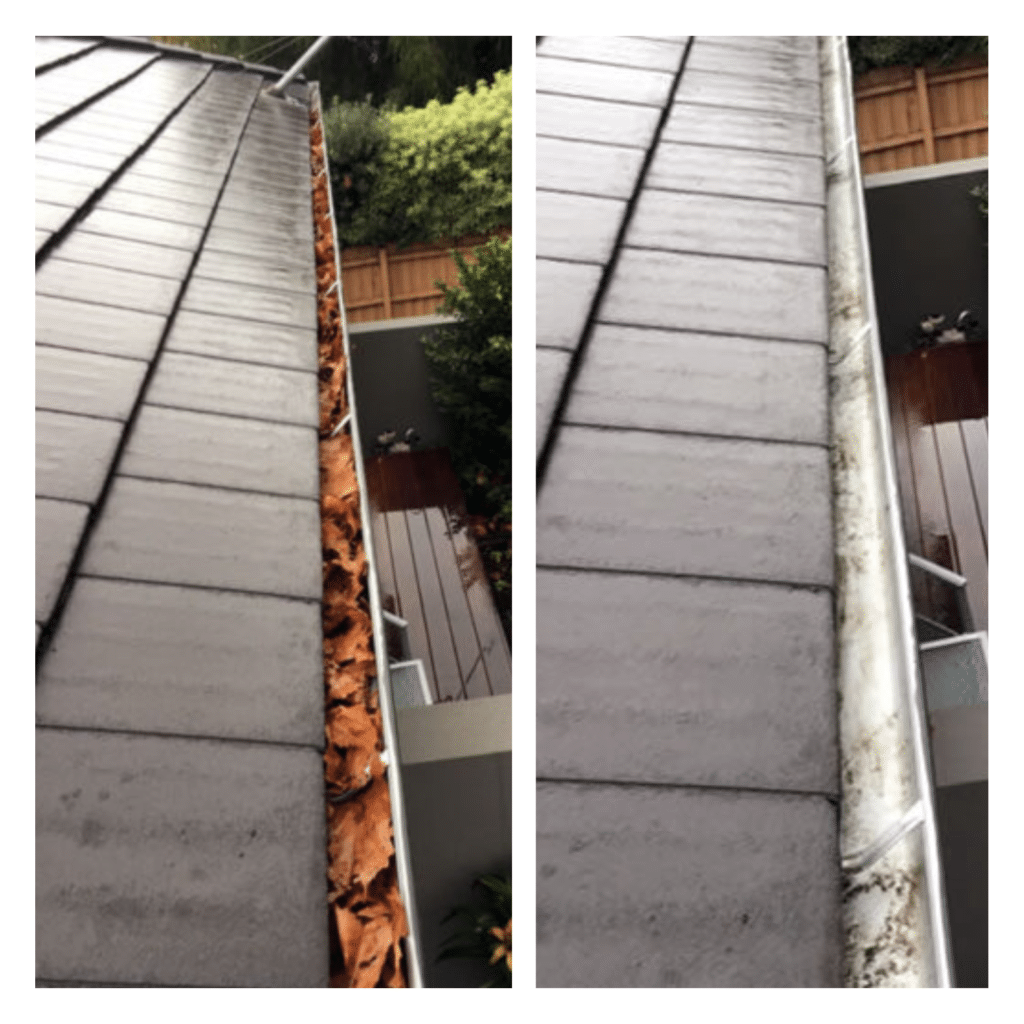
- Gutters and downpipes: overflow marks, sagging, rust, plants growing in them
- Flashings: lifted or rusted metal around chimneys, walls, vents and skylights
- Moss and lichen: heavy growth holds moisture against the tiles
- Trees: branches touching or hanging over the roof
- Debris on the ground: tile fragments or mortar below the eaves
What to check inside
- Ceilings: brown or yellow stains, bubbling paint or sagging plaster, especially after rain
- Cornices and wardrobes: musty smells or mould in upstairs rooms
- Roof space: with a torch, look for daylight through the tiles, water marks on timbers, damp or torn sarking, and wet or flattened insulation
- After heavy rain: drips or damp patches that appear only in wind-driven rain often point to ridge capping or flashings
In the roof space, step only on the ceiling joists or a board laid across them, never on the plaster between. If access is tight or there is old wiring, leave it to a professional.
Found something you are not sure about?
Send us your photos or book a free inspection and we will tell you what it means.
What your findings probably mean
| What you see | Likely cause | What to do |
|---|---|---|
| Stain near a ridge line | Failed ridge bedding or pointing | Rebed and repoint |
| Stain along a valley | Rusted or blocked valley iron | Valley repair |
| Daylight through the roof | Cracked, broken or slipped tiles | Roof repair with matched tiles |
| Mortar in the gutters | Bedding breaking down | Rebed and repoint before caps come loose |
| Faded, porous concrete tiles | Worn surface coating | Restoration and recoat |
| Problems everywhere | Roof reaching the end of its life | Compare restore and replace |
After a storm
Check the ceilings and the ground around the house first, then the roof from the street. Photograph any damage with the date, and keep the photos with your records. Moneysmart notes that most home insurance policies cover storm damage, but Financial Counselling Australia has found that many denied claims rely on wear-and-tear or maintenance exclusions. A record of regular inspections and repairs helps show the damage came from the storm.
Sources: Moneysmart: Storm, flood and fire insurance; Financial Counselling Australia: Wear-and-tear exclusions.
What a professional inspection adds
A roofer can get on the roof safely and see what the ground cannot: hairline cracks, the condition of the bedding under the caps, the sarking around penetrations, and how the valleys are fixed. Royce Roofing inspections are free. We photograph what we find, explain it, and tell you straight whether the roof needs a repair, a restoration or nothing at all yet.
WorkSafe Victoria’s compliance code for housing construction puts edge protection such as guard railing ahead of harnesses and ladders when controlling the risk of falls from a roof. Our crews set up our own temporary safety rail, ladder guards and, where there are old skylights, safety nets before anyone works on the roof. Every crew member holds a working at heights qualification.
Common questions
How often should I inspect my roof?
Look over it from the ground twice a year, before fire season and after any big storm. Have a professional get on the roof every few years, or sooner if you find stains, broken tiles or cracked pointing.
Is it safe to walk on a tiled roof?
No. Tiles crack underfoot, and falls from roofs cause serious injuries even on single-storey homes. Inspect from the ground and the roof space and leave anything on the roof to a professional with safety equipment.
What are the signs of roof damage?
Broken or slipped tiles, cracked ridge pointing, rusted valleys, overflowing gutters, ceiling stains, daylight in the roof space and mortar pieces in the gutters are the most common signs.
How do I check my roof after a hailstorm?
Check ceilings and the ground for tile fragments, then look over the roof from the street with binoculars. Photograph any damage with the date and call your insurer and a roofer.
How much does a roof inspection cost?
Royce Roofing inspects roofs for free and gives you a written quote for any work needed. We show you photos of what we find.
Can a roof leak without a visible stain?
Yes. Water can soak into insulation or run along timbers for some time before it marks the ceiling. Checking the roof space with a torch is the best way to catch it early.
Related
Sources: WorkSafe Victoria: Prevention of falls in housing construction; Agency for Clinical Innovation: Steps to home ladder safety; enHealth: Guidance on the use of rainwater tanks; CFA: Start preparing your property for fire season; Monier: Roof cleaning and maintenance; Moneysmart: Storm, flood and fire insurance; Financial Counselling Australia: Wear-and-tear exclusions.

Comments are closed