Royce Roofing replaces tiled roofs across Melbourne with new terracotta or concrete tiles when restoration is no longer worth it. We inspect for free, tell you honestly whether to restore or replace, and give you a fixed written price before any work starts. Our crews have worked on Melbourne roofs since 1990.
At a glance
- Replacement is for roofs where most tiles, sarking or battens have failed
- Many older roofs can be restored instead, at a fraction of the cost
- Like-for-like tile replacement is generally exempt from a Victorian building permit
- New tiles laid and fixed to AS 2050, new Zincalume valleys, ridges bedded and flexibly pointed
- Our own safety rail, our own crews, our own tile yards in Mulgrave and Doveton
On this page
- Replace, restore or repair?
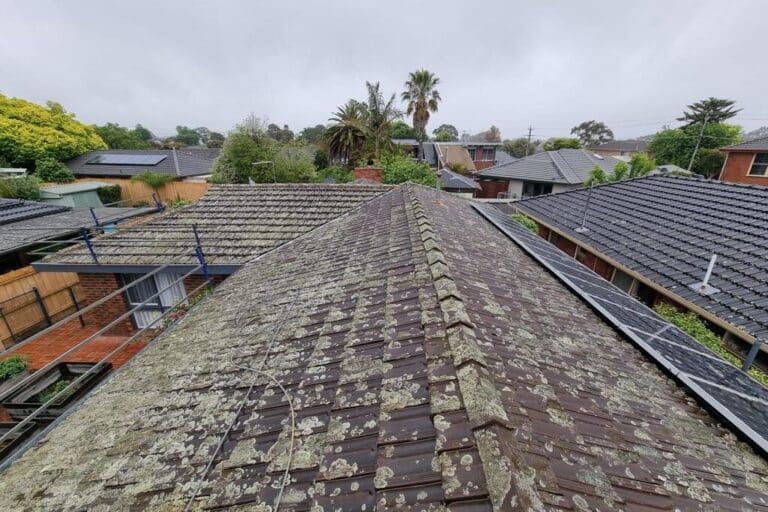
- Signs your roof needs replacing
- How a roof replacement works
- Terracotta or concrete tiles
- What affects the cost of a roof replacement
- Permits, contracts and insurance in Victoria
- Built to Australian Standards
- Built for Melbourne weather
- Safety on every job
- Why Royce Roofing
- Common questions
Replace, restore or repair?
Age alone does not mean a roof needs replacing. A 40-year-old concrete tile roof with sound tiles and a solid frame can usually be brought back with a roof restoration, which repairs, repoints and recoats the roof you already have. A roof with a single problem, such as one rusted valley or a few cracked tiles, often needs only a roof repair. Replacement makes sense when the failures are spread across the whole roof and fixing them one at a time would cost more than starting again.
| Roof condition | Usually the right call |
|---|---|
| A few cracked tiles, one leak, one rusted valley | Roof repair |
| Faded surface, failing ridge pointing, sound tiles and frame | Roof restoration |
| Porous or crumbling tiles across most of the roof | Roof replacement |
| Sarking brittle or torn, battens rotten or sagging | Roof replacement |
| Tile profile discontinued and no stock to match | Replacement of the affected roof plane, or the whole roof |
On a 30-year-old cement tile roof in Wheelers Hill, our crew found the tiles and frame were still solid, so the owner restored rather than replaced. Read the walkthrough in roof restoration vs roof replacement.
Signs your roof needs replacing
Most homeowners never get on the roof, so these are the things our inspectors look for on the roof and in the roof space:
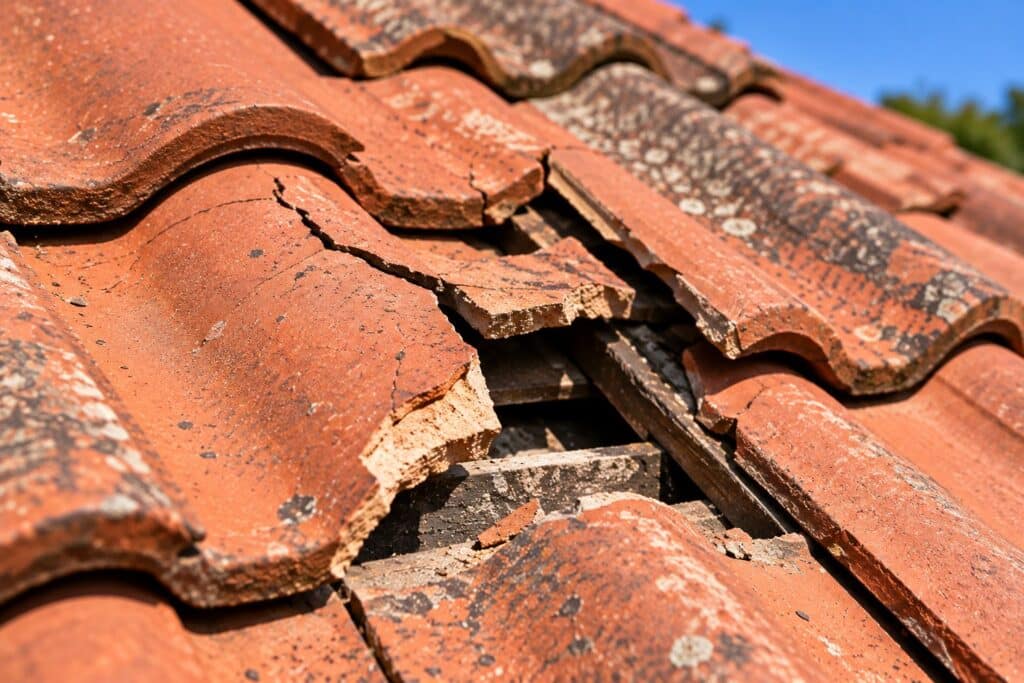
- More than half the tiles are cracked, porous, flaking or crumbling at the edges
- Sarking under the tiles has dried out, gone brittle or torn away
- Battens are rotten, split or no longer fixed firmly to the rafters
- The roof line sags between rafters when viewed from the street
- Leaks keep returning in different places after repairs
- Daylight is visible through the roof from inside the roof space
- The tile profile is so old that matching replacements is no longer practical
One or two of these signs usually point to a repair. Several together usually point to replacement. If your roof is 30 years or older and you have noticed leaks or loose ridge capping, book an inspection before winter.
How a roof replacement works
- Free inspection and fixed quoteWe check tiles, ridges, valleys, sarking, battens, gutters and the roof space, then give you a fixed written price and a timeframe before any work starts.
- Safety set-upOur own team installs our own temporary safety rail, ladder guards and skylight protection. No third-party hire and no extra charge.
- Strip the old roofOld tiles, ridge capping and bedding mortar are removed and taken away. Sound tiles can be kept as spares or recycled.
- Check the frameWith the tiles off, battens and rafters are inspected. Damaged battens are replaced and the roof is made true before tiling.
- SarkingNew sarking goes on where required. Under the National Construction Code, sarking is mandatory on tiled roofs pitched under 18 degrees.
- Valleys and flashingsRusted valley irons are replaced with new Zincalume, and flashings at walls, chimneys and penetrations are renewed.
- Lay and fix the new tilesTiles are laid and mechanically fixed to the pattern the National Construction Code sets for the site’s wind class, with every ridge, hip, barge and valley tile fixed.
- Ridges and hipsRidge and hip capping is bedded and finished with flexible pointing, which flexes with normal roof movement without cracking.
- Clean up and handoverGutters are cleared, all waste is removed, and we walk you through the finished roof.
Not sure if your roof needs replacing?
Book a free inspection. We will tell you honestly whether to repair, restore or replace.
Terracotta or concrete tiles
Both make a durable tiled roof. We stock both across our yards and can show you samples on site before you decide.
| Terracotta | Concrete | |
|---|---|---|
| Colour | Fired through the clay, so it does not fade like a coating | Surface colour and coating weathers over time and can be recoated |
| Manufacturer warranties | Brickworks offers up to a 100-year product warranty | Brickworks offers 50-year and 100-year structural warranties |
| Upfront cost | Higher | Lower |
| Maintenance | Cleaning, repointing and valley care | Cleaning, repointing, valley care, and periodic recoating if painted |
| Best for | Period homes, long-term owners, premium finish | Budget-conscious re-roofs, matching neighbouring concrete roofs |
More detail on our terracotta roof tiles and concrete roof tiles pages.
What affects the cost of a roof replacement
What re-roofing costs on the market. Published Melbourne figures, including strip-off and GST:
| Re-roof in | Low | Typical | High |
|---|---|---|---|
| Concrete tiles | $105/m² | $160/m² | $230/m² |
| Terracotta tiles | $135/m² | $200/m² | $275/m² |
| Colorbond steel | $84/m² | $125/m² | $190/m² |
As a worked example only, a 200 square metre roof in concrete tiles at those rates comes to roughly $21,000 to $46,000. Compare that with a restoration if your tiles are still sound.
These are market ranges from published Australian price guides, not Royce Roofing prices. Every roof is different. We give you a fixed written quote after a free inspection.
Sources: What’s The Damage: Roofing costs in Melbourne (October 2026).
Every roof is different, so we price each one after inspecting it. These are the factors that move the price most:
| Factor | Why it matters |
|---|---|
| Roof area | More square metres means more tiles, sarking, battens and labour. |
| Storeys and pitch | Double-storey and steep roofs need more safety set-up and take longer to work on safely. |
| Roof shape | Hips, valleys, gables and dormers add cutting, flashing and valley iron compared with a simple gable. |
| Tile choice | Terracotta generally costs more than concrete. Profile and colour also affect price. |
| Frame condition | Rotten battens or damaged rafters found during stripping add materials and time. |
| Sarking | Whether new sarking is required, or chosen for insulation and condensation control. |
| Valleys, flashings and gutters | Replacing valleys and flashings is usually part of the job; gutters can be replaced at the same time. |
| Access | Tight side access, steep blocks and long carries from the street add labour. |
Your quote is fixed and written after the inspection, so the price does not change once the crew is on site.
Permits, contracts and insurance in Victoria
Knowing the rules helps you compare quotes properly.
Building permits
Victoria’s building regulator says repairs and renewals that use the same kind of material, with replacing roof tiles with roof tiles as its example, are generally exempt from a building permit. Changing material, for example tiles to Colorbond, generally needs one.
Heritage overlays
If your home is in a Heritage Overlay, council may need to issue a planning permit for work beyond maintenance and repairs. Check with your council before you commit.
Written contract
Under Consumer Affairs Victoria’s rules, domestic building work worth more than $10,000 requires a written major domestic building contract with a registered builder.
Domestic building insurance
Work costing more than $16,000, including labour and materials, requires domestic building insurance. Ask any roofer how they meet this before you sign.
Sources: BPC: When is a building permit required? (BP-01); City of Monash: Roofing renovations; Consumer Affairs Victoria: Work that requires a building contract; VBA: Domestic building insurance; BPC: Domestic builder limited to roof tiling.
Built to Australian Standards
A tiled roof is only as good as the way it is fixed. AS 2050 sets out how roof tiles are installed in Australia, including the materials and installation of sarking, battens, bedding and flexible pointing. The National Construction Code then sets how many tiles must be mechanically fixed, based on the wind class of the site.
- In lower wind classes, every second tile in every course, or every tile in alternate courses, is fixed in the field of the roof
- Every ridge, hip, barge and valley tile is fixed in every non-cyclonic wind class
- Fixings are corrosion-protected clips, screws, galvanised nails, or flexible pointing complying with AS 2050
- Sarking complying with AS 4200.1 is mandatory on tiled roofs pitched under 18 degrees
Sources: HIA: AS 2050 Installation of roof tiles; NCC 2022 Housing Provisions Part 7.3: Roof tiles; Monier: Flexible pointing technical data sheet; CSR Bradford: Sarking for your roof.
Built for Melbourne weather
Melbourne averages around 650 mm of rain a year over about 100 rain days, and severe thunderstorms bring hail. On 19 January 2020, hail up to 5.5 cm across hit south-east Melbourne suburbs including Glen Iris, Malvern East, Templestowe and Warrandyte. A new roof is the chance to get the details right: fixed tiles, sound sarking, clean valleys and ridges pointed with a flexible compound that moves with the roof instead of cracking.
Sources: Bureau of Meteorology: Melbourne Regional Office climate averages; AIDR: Hailstorms and heavy rainfall, Victoria, January 2020.
Safety on every job
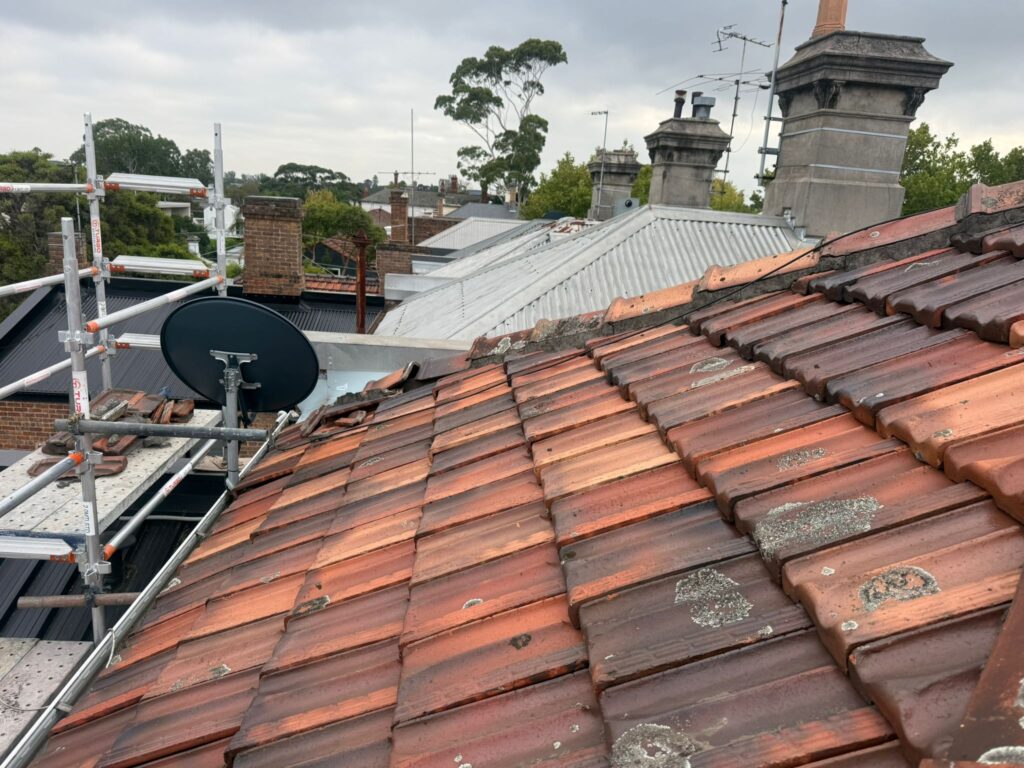
WorkSafe Victoria’s compliance code for housing construction puts edge protection such as guard railing ahead of harnesses and ladders when controlling the risk of falls from a roof. Our crews set up our own temporary safety rail, ladder guards and, where there are old skylights, safety nets before anyone works on the roof. Every crew member holds a working at heights qualification.
Sources: WorkSafe Victoria: Prevention of falls in housing construction.
Why Royce Roofing
Since 1990
Our crews have worked on Melbourne tiled roofs for more than three decades, with over 40 staff on the team.
Our own tile yards
Stock in Mulgrave and Doveton means faster jobs, matched spares, and no waiting on suppliers.
Straight answers
If a restoration or repair will do the job, we will tell you, even though replacement is the bigger job.
Fixed pricing
Every quote is fixed and written before a tool comes out, with no surprises once work starts.
Our own crews and safety rail
No subcontracted labour or hired scaffolding on your roof.
Fully insured
Royce Roofing is fully insured for the work we carry out on your home.
Common questions
How long does a roof replacement take?
It depends on the size of the roof, its pitch, access and the weather, because tiles cannot be laid safely in rain or high wind. We give you a clear timeframe in your written quote after inspecting the roof, so you know before we start how many days the crew will be on site.
Is it cheaper to restore or replace a roof?
Restoration is usually far cheaper when the tiles and frame are still sound, because the existing roof is repaired and recoated rather than stripped. Replacement makes sense when tiles, sarking or battens have failed across most of the roof. We tell you which applies after a free inspection.
Do I need a building permit to replace my tiled roof?
Generally not, if you are replacing tiles with tiles. Victoria’s building regulator lists replacing roof tiles with roof tiles as work exempt from a building permit. Changing to a different material such as metal generally needs a permit, and a Heritage Overlay can trigger a planning permit.
Do I need to move out during a roof replacement?
Usually not. Most families stay at home while we work. We will tell you beforehand if anything in the roof space or around the house should be covered or moved, and we clean up and take all old material away when we finish.
What happens if it rains during the job?
We plan the work around the forecast and make sure the roof is secured and watertight before the crew leaves site each day. Tiles are not laid in rain or high wind, so a wet spell can add days to the schedule, and we keep you updated if it does.
Will you replace the sarking and battens?
Where they are damaged, yes. Once the old tiles are off we inspect every batten and the sarking. Rotten or split battens are replaced, and new sarking is fitted where required. Sarking is mandatory on tiled roofs pitched under 18 degrees under the National Construction Code.
Can I change from tiles to a metal roof?
We specialise in tiled roofs, so our replacements are tile to tile in terracotta or concrete. Changing from tiles to metal generally needs a building permit in Victoria. If you are weighing it up, we can talk you through how a new tiled roof compares.
Can you match my new roof to the neighbours?
We stock a wide range of terracotta and concrete profiles and colours across our Mulgrave and Doveton yards. Bring us a photo of the look you want and we will show you the closest options from stock before you commit to anything.
What should I ask before accepting a roof replacement quote?
Ask what the quote includes, how tiles will be fixed, what safety measures the crew uses, who does the work, what warranties apply, and how the roofer meets Victoria’s contract and domestic building insurance rules for work over $10,000 and $16,000. A good roofer answers all of these openly.
Do you replace roofs across all of Melbourne?
Yes. We work across the Melbourne region from our office and tile yard in Mulgrave, with a second yard in Doveton. Wherever you are, the inspection is free and the quote is fixed before any work starts.
Related services