An older roof does not automatically mean you need to replace the whole thing.
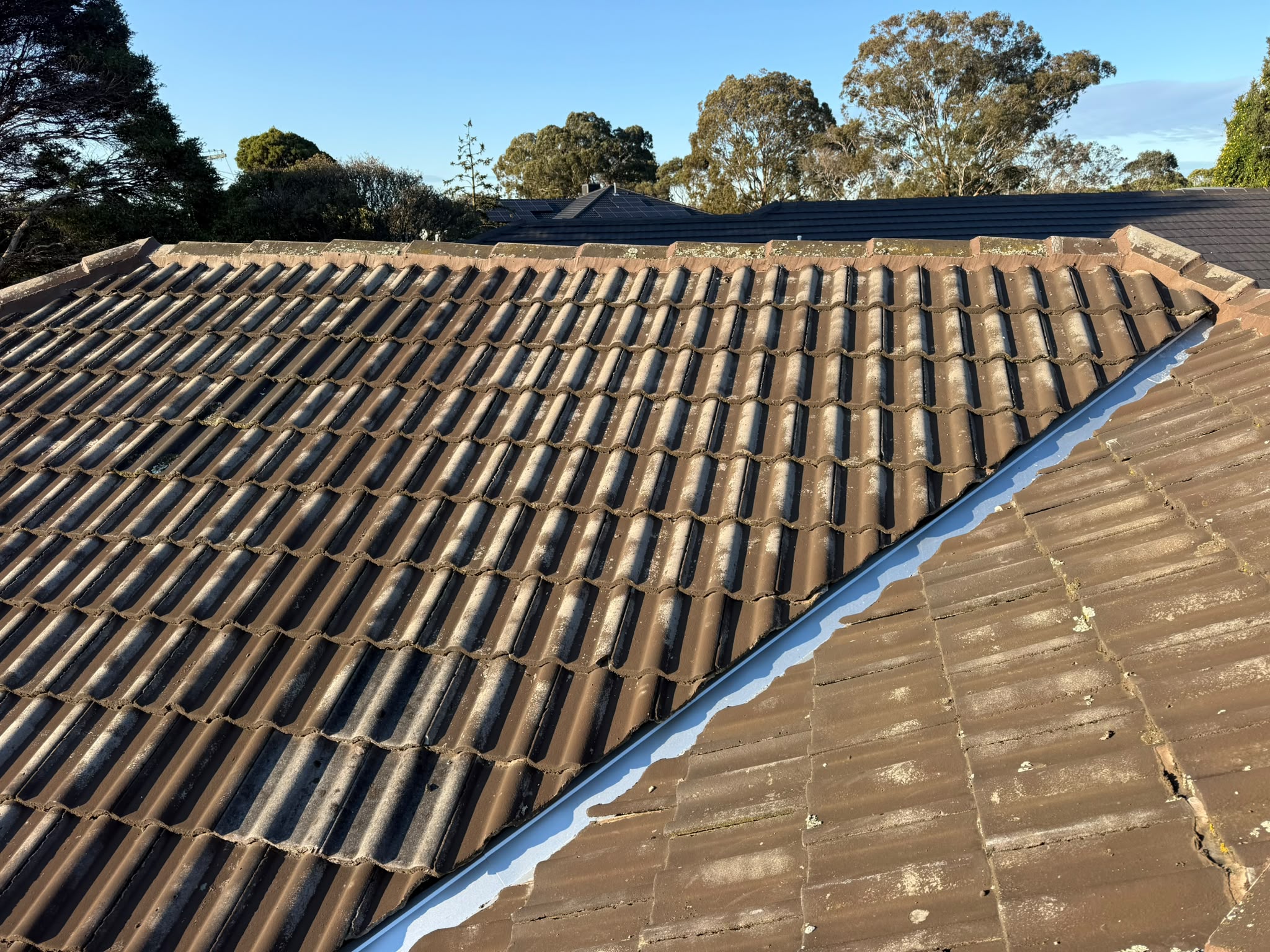
We recently headed out to a residential property in Wheelers Hill with James, one of our crew members who has been tiling for 11 years. The house had its original cement tiled roof — around 30 years old — and while it was showing signs of age, James considered it still quite solid. Not every roof that age needs a full replacement.
The focus for this job was rebedding and repointing, replacing a few porous tiles, and maintaining what was already there.
So how do you know whether your roof needs a repair, a restoration, or a complete reroof? We spoke with James while he was on the job to get his perspective straight from the roof.
An Older Roof Doesn’t Always Need Replacing
The house in Wheelers Hill had its original cement tiled roof and was around 30 years old.
Although the roof was getting older, James considered its overall integrity to be quite solid. It wasn’t at the stage where he believed it needed a complete reroof.
James estimated that with the right work, it could potentially last another 10 to 15 years before it started to deteriorate further.
“The integrity of it is quite solid. It’s not at reroof stage yet. We can definitely just do a repair and it will last the next 10 to 15 years. The house and the roof have good bones.” James, Royce Roofing crew member
The approach was to maintain what was already there and replace the whole roof later on when it was actually needed.
What Is Roof Rebedding and Repointing?
The work being carried out on this particular roof involved rebedding and repointing.
James explained that this involves removing the old mortar that has been on the roof for some time, cleaning everything up and making sure the area is properly prepared. Any tiles that need to be recut can also be recut so everything can be put back together properly.
The tiles on this roof were generally in good condition. There were, however, a few tiles that had become quite porous, so those were replaced where necessary.
When Is Roof Repair Enough?
According to James, it comes down to looking at the overall integrity of the roof.
If the tiles are still in good condition, you may be able to avoid a complete reroof.
The condition of the existing bedding is another important factor. If the bedding is starting to look tired, rebedding and repointing may be the appropriate work.
However, if the tiles themselves have become quite porous, that’s when you may start looking towards a reroof.
“It just comes down to the right judgment on how old the roof is and what needs to be done.” James
What Happens If Roof Damage Is Left Too Long?
One of the main priorities with any roof is keeping it watertight.
Cracked and broken tiles can create leaks, which can then cause damage inside the home. James mentioned potential damage to things such as plaster and electrical systems, which can become a much bigger expense if the problem is left for too long.
Water can also get into the insulation and cause it to become damp.
“The main priority is to keep the roof watertight. Cracked and broken tiles can create leaks which can cause damage internally, your electricals and your plaster, and the bill can be astronomical if it’s left too long.” James
There can also be signs around the roof itself. Chunks of old mortar in the gutters or around the valleys can be an indication that the roof’s mortar is deteriorating.
As with many maintenance issues, the longer a roofing problem is left, the more problems can potentially arise.
Roof Repair, Restoration or Reroofing: What’s the Difference?
The condition of the existing roof is what helps determine which approach is appropriate.
Roof repair may be suitable when the roof is generally in good condition but has individual areas that need attention, such as damaged or broken tiles.
Roof restoration can involve work such as rebedding and repointing, along with replacing tiles that have become damaged or porous.
Reroofing becomes an option when the existing roof has deteriorated to the point where repairing and maintaining it is no longer the best approach.
James’ approach is to look at the integrity of the roof, the condition of the tiles and the condition of the existing bedding before deciding what work is actually required.
What Should Homeowners Ask Before Accepting a Roofing Quote?
If you think your roof needs work, getting a couple of quotes is a good way to compare your options.
But James says homeowners should look beyond the price.
“A good roofer wouldn’t hide anything that they’re doing. They can literally answer any question about what the quote entails. The cowboys come in and do a really low quality job for next to nothing but they won’t be able to tell you what they’re actually doing or what the warranties are.” James
Homeowners should ask questions and make sure they understand:
- What does the quote include?
- What work is actually being carried out?
- Why is the work necessary?
- Why does the process cost what it does?
- What warranties are included?
Safety Comes First on Every Roofing Job
Before getting onto the roof, James explained that the first step is to assess the hazards.
“The first thing we do is assess any hazards. We go through, make sure there are no skylights or anything that could potentially create a hazard, set up the ladder tied off, make sure everything’s all good to get up, and then obviously set the harnesses up.” James
The exact safety setup depends on the job and the site. For a job that won’t take very long, the crew may use safety harnesses. On other jobs, such as certain double-storey properties, a safety rail system may be more appropriate.
Working at Heights Requires Proper Training
James had only been with the company for a short time at the time of the interview, but said he had already been given a full rundown on how the harnesses are used and how to use them safely.
“I was not even two days in and I was given a full rundown of how we use the harnesses and how to use them safely. Most if not all the roofers have working at heights qualifications as well.” James
Working on a roof is high-risk work, and James’ message was straightforward: the hazard of falling needs to be respected.
A Real Example From a 30-Year-Old Roof in Wheelers Hill
This Wheelers Hill job is a good example of why the age of a roof isn’t the only thing that matters.
The roof was around 30 years old and was showing signs that it needed maintenance. However, its overall integrity was still considered quite solid.
Rather than immediately replacing the entire roof, the work focused on rebedding and repointing, cleaning up the existing mortar and replacing the small number of tiles that had become porous.
For James, the roof still had “good bones.”
The goal was to maintain what was already there and deal with the parts that actually needed attention.
How Do You Know What Your Roof Needs?
There isn’t one answer that applies to every roof.
The condition of the tiles, bedding and overall roof structure all need to be considered.
If you’re concerned about an older roof, look for signs such as:
- Cracked or broken tiles
- Porous tiles
- Deteriorating bedding or mortar
- Chunks of mortar appearing in gutters or valleys
- Signs of water entering the roof
- Leaks or internal water damage
The important thing is not to assume that an older roof automatically needs to be completely replaced.
A proper assessment can help determine whether the roof needs a repair, restoration or reroof.
Not sure what your roof needs? Call Royce Roofing on 1300 992 911 for a free, no-obligation inspection. We’ll give you an honest assessment — no pressure, no upselling.
Comments are closed