

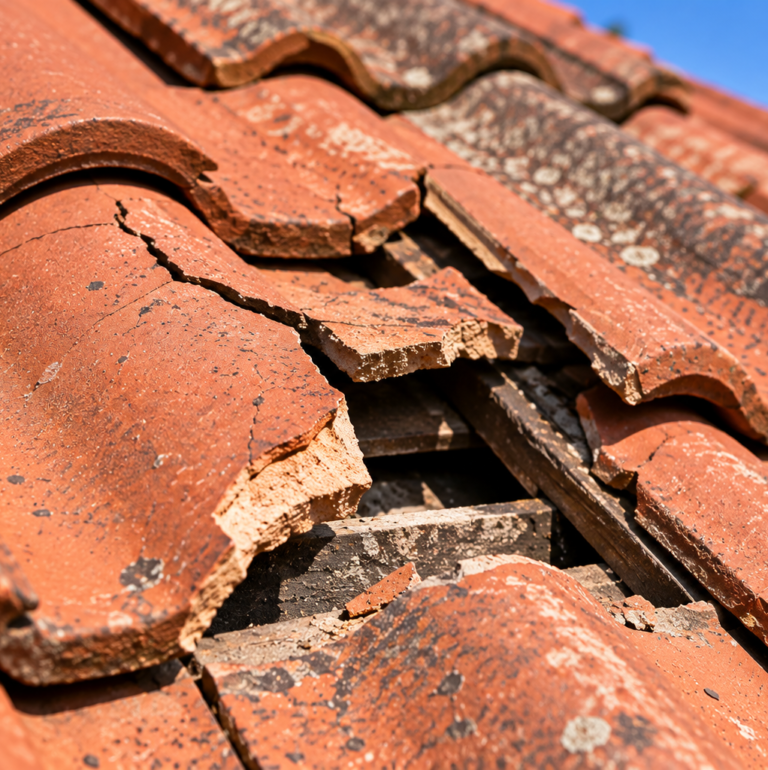
Replacing a broken roof tile means lifting the tiles that overlap it, sliding the broken one out, checking the sarking and batten underneath, and hooking a matching tile into place so its lugs sit over the batten, then refixing it as the roof requires. It is a quick job for a roofer, but it means working on the roof, so for most homeowners the right step is finding the tile and calling a professional.
The short answer
- Match the tile first: material, maker, profile and colour
- Lift the overlapping tiles, remove the broken one, check underneath
- Hook the new tile over the batten and refix it where required
- Sealant on a cracked tile is a temporary fix, not a repair
- Broken ridge capping needs a rebed, not a tile swap
Before you start
Walking on a tiled roof cracks tiles and puts you at risk of a fall. WorkSafe Victoria’s compliance code for housing construction treats falls from roofs as a serious hazard and puts edge protection ahead of ladders and harnesses. If you are not trained and equipped to work at height, use this guide to understand the job and brief a roofer, not to do it yourself.
The Agency for Clinical Innovation’s home ladder guidance: set the ladder on dry, firm, level ground; put the foot of an extension ladder out from the wall by a quarter of its length; have it extend at least one metre above the gutter; keep three points of contact; have someone hold the base; and never stand above the third rung from the top. Do not walk on the roof itself. Tiles crack underfoot and a fall from a single-storey roof can be fatal.
Sources: WorkSafe Victoria: Prevention of falls in housing construction; Agency for Clinical Innovation: Steps to home ladder safety.
Step 1: find a matching tile
Check the shed or garage for spares left over from the build. If there are none, photograph the front and back of a tile and find a match in material, maker, profile and colour. Our guide to finding replacement roof tiles covers this in detail, and our yards hold over 200 tile types, new and second-hand.
Step 2: how the tile is replaced
- Lift the tiles aboveThe tiles in the course above overlap the broken one. A roofer lifts them slightly and wedges them up to free the broken tile.
- Remove the broken tileAny fixings are released and the tile is lifted off the batten and slid out, along with all broken pieces.
- Check underneathWith the tile out, the sarking, batten and any water marks are checked. A tear in the sarking is the time to find it.
- Fit the new tileThe replacement is slid up under the course above until its lugs hook over the batten, and lined up with its neighbours.
- Refix as requiredTiles are fixed to AS 2050 and the National Construction Code. Edge, ridge, hip, barge and valley tiles always need fixing.
- Lower and checkThe tiles above are lowered back into place and the area is checked for any other cracked tiles.
Sources: HIA: AS 2050 Installation of roof tiles; NCC 2022 Housing Provisions Part 7.3: Roof tiles.
Got a broken tile?
We match it from our yards and replace it. Book a free inspection or send us a photo.
Temporary fixes for a cracked tile
If a tile is cracked rather than broken and rain is coming, a roofing sealant along the crack can hold off water for a short time. It is a stopgap. The tile is still weakened, sealant breaks down in the sun, and water can still track along the underside. Replace the tile as soon as you can. Read temporary fixes for a leaking roof for what to do in the meantime.
Broken ridge or hip caps are a different job
The curved caps along the ridges and hips are not hooked over battens like ordinary tiles. They are bedded in mortar and sealed with pointing. A broken cap is replaced by rebedding it and repointing the run, which is a rebed and repoint job.
Permits and insurance
Replacing tiles like for like generally does not need a building permit in Victoria. If the tiles were broken in a storm, photograph the damage before it is repaired and keep the invoice. Moneysmart notes most home insurance covers storm damage, though wear-and-tear exclusions are a common reason claims are refused.
Sources: BPC: When is a building permit required? (BP-01); Moneysmart: Storm, flood and fire insurance; Financial Counselling Australia: Wear-and-tear exclusions.
When to call a roofer
- Any time it means walking on the roof
- Several broken tiles, or tiles breaking repeatedly in the same area
- Water stains inside, which mean water has already got past the tile
- Broken ridge or hip caps
- Tiles cracked by other trades such as solar or antenna installers
Royce Roofing replaces broken tiles across Melbourne using matched tiles from our own yards. See roof repairs.
Common questions
Can I replace a broken roof tile myself?
It is physically simple but it means working on the roof, where tiles crack underfoot and falls cause serious injuries. Unless you are trained and equipped for work at height, find the matching tile and have a roofer fit it.
How do you remove a broken roof tile?
The tiles in the course above are lifted slightly and wedged, any fixing is released, and the broken tile is lifted off the batten and slid out.
Can you glue a cracked roof tile?
Sealant can hold off water briefly, but it is a temporary fix. The tile is still weak and sealant breaks down in the sun, so replace it as soon as you can.
How long does it take to replace a roof tile?
A single tile is usually a short job once the matching tile is on hand. Finding the match is often what takes longest.
Do new roof tiles need to be nailed or clipped?
Fixing requirements are set by AS 2050 and the National Construction Code. Edge, ridge, hip, barge and valley tiles always need fixing; other tiles depend on the roof and wind conditions.
What if my ridge cap is broken?
Ridge and hip caps are bedded in mortar and pointed rather than hooked over battens. A broken cap needs rebedding and repointing.
Related
Sources: WorkSafe Victoria: Prevention of falls in housing construction; Agency for Clinical Innovation: Steps to home ladder safety; HIA: AS 2050 Installation of roof tiles; NCC 2022 Housing Provisions Part 7.3: Roof tiles; BPC: When is a building permit required? (BP-01); Moneysmart: Storm, flood and fire insurance; Financial Counselling Australia: Wear-and-tear exclusions.

Comments are closed