

The best way to clean gutters is to remove the debris rather than blow it around: scoop it out by hand from a properly set-up ladder, or have it vacuumed out from the ground. Then flush the downpipes with a hose. Do it at least twice a year and before fire season, disconnect any rainwater tank inlet first, and stay off the roof.
The short answer
- Clean gutters at least twice a year, and before fire season
- Scooping by hand or vacuuming removes debris; blowers just move it
- Flush downpipes with a hose to check they drain
- Disconnect rainwater tank inlets while cleaning
- Use a ladder safely, or have it done from the ground
How often to clean your gutters
Health guidance on rainwater tanks recommends cleaning roofs and gutters twice a year. The CFA lists clearing gutters as basic preparation before fire season, when dry leaves in gutters are a fire risk. If you have trees overhanging the roof, you may need to clean more often, and checking after autumn leaf fall is worthwhile.
Sources: enHealth: Guidance on the use of rainwater tanks; CFA: Start preparing your property for fire season.
Gutter cleaning methods compared
| Method | How it works | Pros | Cons |
|---|---|---|---|
| By hand | Scoop debris into a bucket from a ladder | Cheap, thorough | Slow, lots of ladder moves |
| Vacuum | A high-powered vacuum with poles lifts debris out from the ground | No climbing, debris collected not scattered | Equipment cost; usually a professional service |
| Leaf blower | Blows dry leaves out of the gutter | Fast for dry leaves | Scatters debris, poor on wet sludge |
| Hose flush | Water washes fine debris to the downpipe | Good final step | Can block downpipes if used first |
Whatever you use, finish by running a hose into each gutter and watching the downpipes drain freely.
How to clean gutters by hand
- Disconnect the tank inletIf you have a rainwater tank, disconnect or divert the inlet so debris does not wash into your water supply.
- Set up the ladder properlyFirm, level ground, the foot out from the wall a quarter of the ladder’s length, and the top at least one metre above the gutter.
- Scoop, do not pushWork from the downpipe outwards, scooping debris into a bucket hooked to the ladder. Wear gloves.
- Move the ladder oftenStay within arm’s reach and keep your waist between the rails. Never lean out.
- Flush and checkRun a hose along each gutter and check every downpipe drains freely.
- Look for damageNote rust, sagging brackets, leaking joints and any broken tiles you can see from the ladder.
The Agency for Clinical Innovation’s home ladder guidance: set the ladder on dry, firm, level ground; put the foot of an extension ladder out from the wall by a quarter of its length; have it extend at least one metre above the gutter; keep three points of contact; have someone hold the base; and never stand above the third rung from the top. Do not walk on the roof itself. Tiles crack underfoot and a fall from a single-storey roof can be fatal.
Sources: Agency for Clinical Innovation: Steps to home ladder safety; enHealth: Guidance on the use of rainwater tanks.
While you are up there, how is the roof?
If you spot broken tiles or cracked ridge capping from the ladder, book a free roof inspection.
When to use a professional
Two-storey homes, steep blocks, roofs you cannot safely reach and gutters full of wet sludge are worth handing over. A vacuum service does the job from the ground and takes the debris away.
Royce Roofing’s sister business, PorterVac, specialises in vacuum gutter cleaning across Melbourne. Royce looks after the roof itself: tiles, ridge capping and valleys.
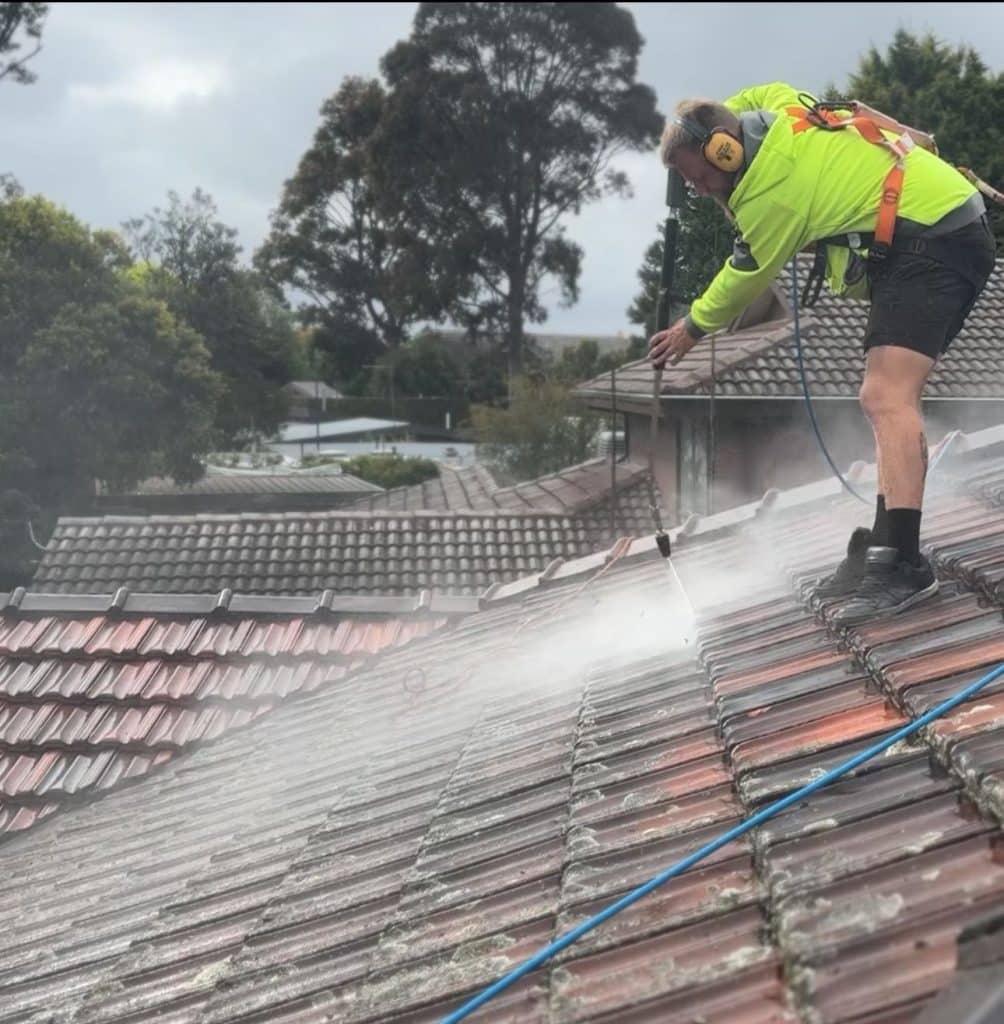
Do not forget the valleys
Valleys are the metal channels where two roof slopes meet. They collect leaves just like gutters, but they are on the roof, so they are not a ladder job. Monier recommends valleys be cleaned at least yearly. Blocked valleys force water sideways under the tiles, and rusted valleys leak straight into the roof space. See roof valley repairs.
Sources: Monier: Roof cleaning and maintenance.
Signs your gutters need attention
- Water spilling over the gutter edge in rain
- Stains or moss on fascias and the walls below the gutters
- Plants growing in the gutters
- Sagging gutters or brackets pulling away
- Rust spots or holes, especially in old galvanised gutters
- Downpipes that gurgle, overflow or do not drain
BlueScope does not recommend galvanised steel for gutters, so if yours are galvanised and rusting, replacement in Zincalume or Colorbond is usually the better fix.
Do gutter guards stop the cleaning?
Gutter guards reduce how much debris gets in, but they do not stop it entirely. Fine material still builds up and guards need checking and cleaning too. Read can you still get your gutters cleaned with gutter guards on.
Common questions
How often should gutters be cleaned?
At least twice a year, and before fire season. Homes with overhanging trees may need it more often, especially after autumn leaf fall.
What is the safest way to clean gutters?
Vacuuming from the ground avoids ladder work altogether. If you use a ladder, set it on firm level ground, keep three points of contact, have someone hold the base and never stand on the roof.
Is it better to blow or scoop gutters?
Scooping or vacuuming removes the debris. A blower is quick for dry leaves but scatters them and struggles with wet sludge.
Should I disconnect my rainwater tank when cleaning gutters?
Yes. Health guidance recommends disconnecting the tank inlet while cleaning so debris and contaminated water do not wash into your water supply.
Do I need to clean my roof valleys too?
Yes. Valleys collect leaves like gutters and should be cleaned at least yearly, but they are on the roof, so leave them to a professional.
Can blocked gutters cause roof leaks?
Yes. Water backs up under the bottom row of tiles and into the eaves, and blocked valleys push water under the tiles further up the roof.
Related
Sources: enHealth: Guidance on the use of rainwater tanks; CFA: Start preparing your property for fire season; Agency for Clinical Innovation: Steps to home ladder safety; Monier: Roof cleaning and maintenance; BlueScope: Steel for gutters and downpipes.

Comments are closed